


Soft Skills for the 21st Century: Critical Thinking and Collaboration
Work changes quickly, but people still need to make sound decisions, solve problems and work with others. Critical thinking and collaboration help employees respond to new information and contribute to shared goals. They are learnable skills, not personality types, and they work best alongside the technical knowledge needed for a role.
Why soft skills matter in today’s changing world of work
Soft skills matter because changing tasks and tools require people to keep learning, judge information and coordinate with others. Critical thinking, collaboration and communication help workers adapt while applying their technical skills in real situations.
Digital tools can make information and teamwork easier to access, but they also bring new demands. A worker may need to check whether a message is reliable, learn an unfamiliar process or explain a problem to colleagues in different locations. Digital literacy helps people use technology effectively; critical thinking helps them assess what they encounter through it.
These skills also affect employability and participation in the labour market. Hiring, training and day-to-day work often involve explaining decisions, asking for clarification and coordinating responsibilities. Strong skills can help someone show what they know, though they cannot guarantee employment or replace role-specific qualifications.
Employers benefit when teams can share knowledge and respond constructively to change. Workers benefit when they can contribute ideas, learn from feedback and take part in decisions that affect their work. The opportunity to develop these abilities, however, depends partly on whether training and workplace practices are accessible.
What critical thinking looks like at work
Critical thinking at work means examining information, questioning assumptions and weighing possible actions before making a decision. It helps people distinguish evidence from opinion and choose a response that fits the situation.
For example, if a team sees a sudden rise in customer complaints, it could assume that a staff member made mistakes. A critical thinker checks the pattern first: Did complaints increase after a system update? Are they concentrated around one process? What do customers and colleagues report? Those questions make it easier to identify a cause before deciding what to change.
In everyday work, critical thinking can look like:
- Checking the source, date and context of information before sharing it.
- Asking what evidence supports a proposed decision.
- Separating a confirmed fact from a guess or interpretation.
- Considering who may be affected by a change and what risks it creates.
- Reviewing a result and adjusting the approach when it does not work.
Questioning an idea is not the same as being negative. The aim is to improve the decision, not to delay action indefinitely. A useful habit is to ask, “What would change my mind?” If there is no realistic answer, the team may be treating an assumption as a fact.
Collaboration as a practical workplace skill
Collaboration is the ability to work with others toward a shared goal by communicating clearly, coordinating tasks and sharing responsibility. Effective teamwork makes room for different perspectives while keeping attention on the work to be done.
Imagine colleagues preparing a new service. One understands customer needs, another knows the technical process, and a third handles scheduling. Collaboration means making responsibilities clear, sharing relevant information and agreeing how the pieces fit together. If one person is overloaded or a deadline changes, the team discusses the impact rather than letting the problem surface at the last minute.
Good collaboration depends on more than friendly conversation. Teams need practical agreements about:
- Purpose: What outcome are we working toward?
- Roles: Who owns each task, and who can help?
- Communication: Which channel should we use, and when do we need a response?
- Follow-through: How will we track progress and raise obstacles?
Agreement is not the same as effective teamwork. Respectful disagreement can expose a risk or improve an idea. The goal is to hear competing views, test them against evidence and decide how to proceed. Without clear roles, collaboration can also create extra meetings or leave essential tasks unowned, so teams should choose coordination methods that fit the work.
How critical thinking and collaboration reinforce each other
Critical thinking and collaboration reinforce each other when team members use careful questions and open discussion to solve problems. Critical thinking improves the quality of shared decisions, while collaboration brings more knowledge and perspectives into the process.
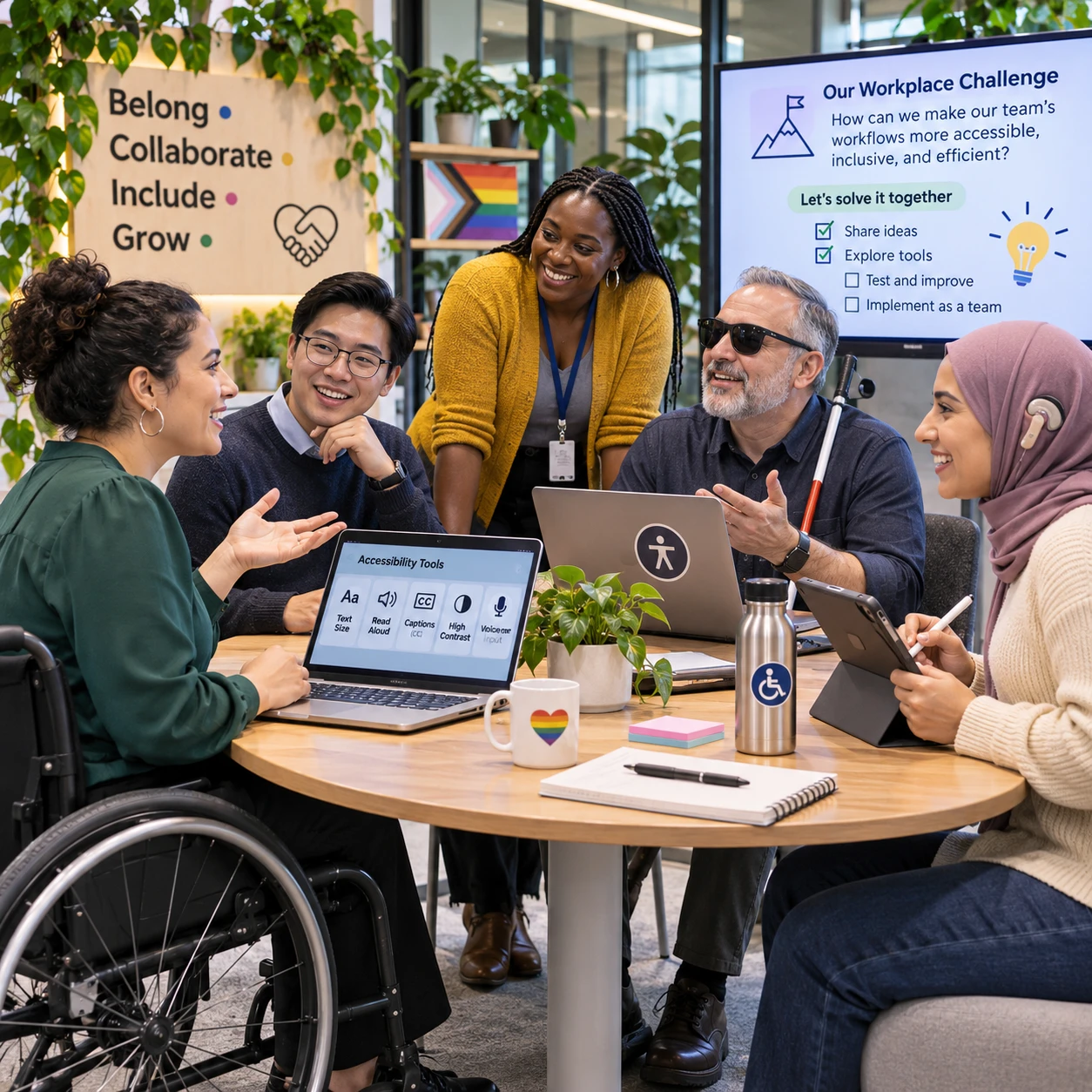
Consider a workplace team deciding how to reduce delays. One employee may notice that a handover creates repeated questions; another may know that an accessibility step is being skipped; a third may have data showing when delays occur. Each perspective is partial. Through discussion, the team can compare observations, check the evidence and find a solution that addresses the cause without creating a new barrier.
A simple shared problem-solving sequence can help:
- Define the issue. Describe what is happening without assigning blame.
- Gather perspectives. Ask people who experience different parts of the process.
- Check assumptions. Separate observations from explanations and look for missing information.
- Choose an action. Agree on a manageable change, an owner and a way to review its effect.
This approach gives communication a practical purpose: people exchange information that helps the team act. It also makes problem-solving more inclusive, because the person closest to an obstacle may see something that a decision-maker cannot.
Building these skills through everyday practice
Critical thinking and collaboration can be strengthened through regular, low-risk practice at work. Short reflection, useful feedback and shared tasks give people chances to try new approaches and learn from the result.
Individuals can practise critical thinking by pausing before acting on a claim or proposal. Ask: What do I know? What am I assuming? What information is missing? What are the likely effects of each option? A brief note after a decision can also help: record what was expected, what happened and what you would change next time.
For collaboration, try agreeing on roles and communication expectations before a task begins. Afterward, ask colleagues what helped and what caused friction. Peer feedback works best when it describes a specific behaviour and its effect, such as, “The written summary helped me finish the task without needing another meeting.”
Managers can make practice part of ordinary work by rotating meeting facilitation, inviting employees to explain a process and using short reviews after projects. Keep these activities connected to real tasks. A structured discussion may help a team reach a better decision, but adding meetings without a clear purpose can take time away from the work itself.
Formal training can be useful, particularly for role-specific methods or digital tools. Still, people can develop these skills without a course when they receive time to practise, clear feedback and support when they make mistakes.
Making skills development inclusive
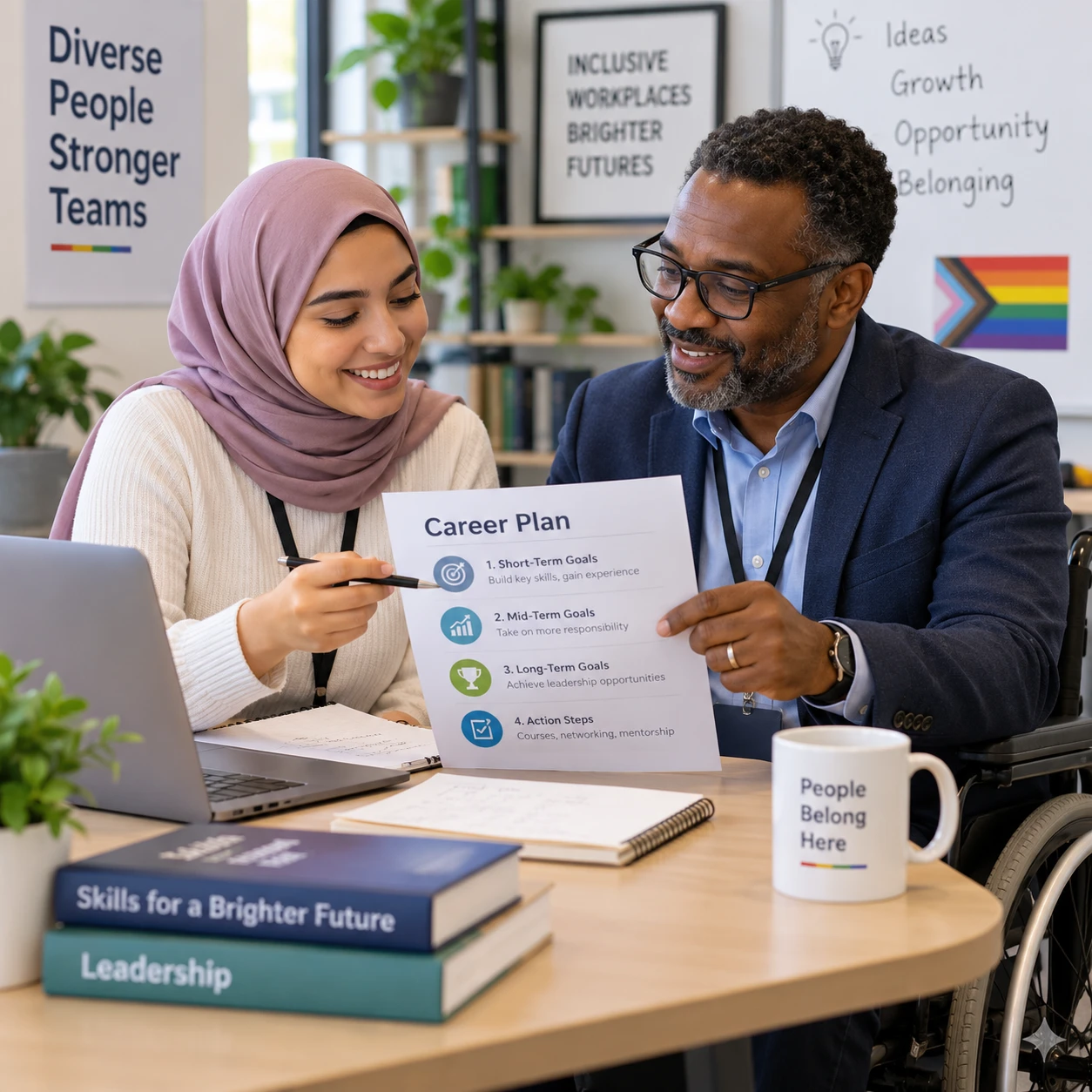
Inclusive skills development gives people fair access to learn, practise and demonstrate critical thinking and collaboration. Employers can support participation by offering accessible training, flexible ways to communicate and a workplace culture where questions and different perspectives are welcome.
People do not all communicate or learn in the same way. Some contribute best in a live discussion; others need time to reflect or prefer to share ideas in writing. Accessible practice might include sending an agenda in advance, providing captions for online sessions, using plain language, allowing more than one way to contribute and checking that digital tools work with assistive technology.
Employers should also look at the conditions around skill development. If training is available only outside paid hours, some workers may be unable to attend. If managers reward quick agreement, employees may keep concerns to themselves. If a worker is asked to collaborate but has no authority, information or time to contribute, the problem is structural, not a personal lack of soft skills.
Useful steps include:
- Offer learning in accessible formats and during working hours where possible.
- Use transparent criteria to assess teamwork and problem-solving.
- Invite feedback from employees who face barriers to participation.
- Give teams clear objectives, reasonable time and access to relevant information.
- Recognize different contributions, including careful analysis, coordination and practical support.
Inclusive workplaces make skills development a shared responsibility. Individuals can build habits of inquiry and communication, while employers can remove barriers that prevent people from using those skills. Together, these efforts help more workers participate meaningfully and demonstrate what they can do.