



Green Jobs: Training for the Sustainable Economy
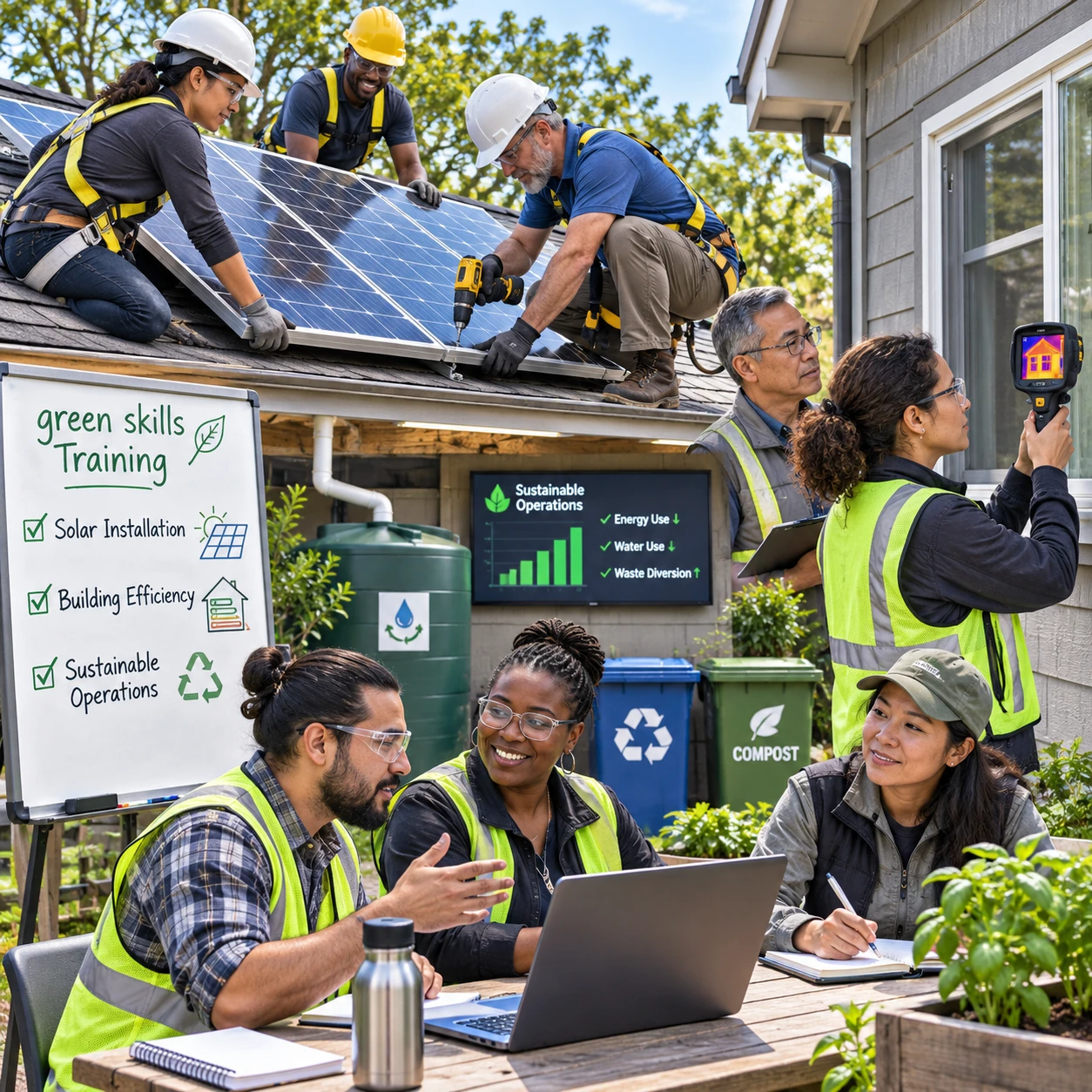
Green jobs are found across the economy, from installing renewable energy systems to improving buildings, managing materials and supporting environmental services. Training can help people enter this changing labour market, whether they are starting out, returning to work or moving from another occupation.
There is no single route into green work. The right pathway depends on the role, local opportunities, existing skills and the support available. Understanding how green skills connect to real tasks is a useful first step.
What counts as a green job?
A green job contributes to protecting or restoring the environment, reducing environmental harm, or helping people and communities adapt to environmental change. These roles exist in many sectors, and some are traditional occupations with new sustainability-related tasks.
Renewable energy is an obvious example: technicians may install or maintain solar panels, wind turbines and related electrical systems. But green work also includes home energy assessors, building retrofit workers, public transport staff, environmental educators, sustainable procurement officers and waste-management teams.
A practical way to identify a green job is to look at its day-to-day contribution, rather than relying on the job title. Does the work reduce energy use or pollution, protect ecosystems, improve resource efficiency, or support climate resilience? A role may contribute directly, such as repairing heat pumps, or indirectly, such as coordinating sustainable purchasing for a large organisation.
Not every job in a company that uses green language is automatically a green job. Look for clear responsibilities, credible environmental standards and evidence of what the role changes. This distinction helps jobseekers assess opportunities realistically and helps employers describe work accurately.
Why green skills matter in a changing labour market
Green skills matter because sustainability goals are changing how organisations design, build, operate and maintain products and services. Workers need a mix of practical occupational knowledge and the ability to apply it in more resource-efficient ways.
In some roles, the change is technical. Building workers may need to understand insulation, ventilation and heat-pump installation. In others, the core occupation remains familiar, but decisions shift: a purchasing team may compare suppliers on material use, while a logistics team may plan routes to reduce fuel consumption.
This creates opportunities for reskilling and upskilling. Reskilling prepares someone for a different role; upskilling expands skills within their current field. Both can connect existing experience to the sustainable economy. A maintenance worker, for example, may build on troubleshooting skills to service more efficient equipment, while a customer adviser might learn how to explain energy programmes clearly.
Demand varies by region, industry and investment cycle. A course alone cannot guarantee a job, and a national trend may not translate into nearby vacancies. Workforce development works best when training providers, employers and local employment services coordinate around actual hiring needs, equipment and recognised qualifications.
Skills and roles to explore
Green jobs draw on transferable skills as well as specialist knowledge, so people can enter through technical, operational, administrative and community-facing roles. The best starting point is to connect what you already do well with the environmental tasks employers need completed.
Transferable skills can include problem-solving, communication, project coordination, customer service, data handling, teamwork and safe working practices. These skills matter in green industries because projects often involve multiple trades, clients, suppliers and compliance requirements.
- Renewable energy: electrical installation, mechanical maintenance, health and safety, fault-finding, and customer communication may support work on solar, wind or other clean-energy systems.
- Energy efficiency and buildings: construction experience can connect to insulation, energy assessments, efficient heating, building controls and retrofit coordination. Attention to detail and an understanding of how building systems interact are valuable.
- Sustainable operations: administration, procurement, logistics and data skills can support waste reduction, responsible sourcing, energy monitoring and environmental reporting.
- Land, water and environmental services: practical outdoor work, ecological monitoring, conservation, grounds maintenance and community engagement can contribute to habitat and resource protection.
Technical roles may require licences, safety credentials or supervised practice; requirements differ by location and occupation. A short introductory course can help someone test an area of interest, but it may not replace formal certification. Before enrolling, check job adverts and ask employers which qualifications they recognise.
Training routes into green work
Training routes into green work include vocational education and training, apprenticeships, work-based learning and short skills programmes. Choose a route by matching the role’s entry requirements with your schedule, finances and preferred way of learning.
Vocational education and training
Vocational education and training (VET) combines occupational knowledge with practical learning. Depending on the field, it may cover electrical systems, construction, energy assessment, environmental management or equipment maintenance. Check whether the course includes hands-on practice, current tools and qualifications employers accept.
Apprenticeships and work-based learning
Apprenticeships blend paid employment with structured learning and can be a strong option for people who learn by doing. They may take longer than a short course, but provide supervised experience and a clearer connection to an employer. Work placements and employer-led projects can offer similar exposure where apprenticeships are not available.
Short courses and skills programmes
Short programmes can introduce concepts such as building energy performance, sustainability reporting or safe work practices. They are useful for testing an interest or adding a targeted skill, although a brief certificate may not qualify someone for a regulated or technical role on its own.
Before committing, ask about total costs, equipment, travel, accessibility, course completion support and links to employers. If you need help comparing options, a local careers service or employment programme may identify funding and practical support. The U.S. Department of Labor’s CareerOneStop offers career, training and job-search resources; people elsewhere should check their national or regional equivalents.
Making green career pathways inclusive
Inclusive green career pathways make training and employment accessible to people with different circumstances, starting points and support needs. Flexible delivery, clear information and fair recruitment can help widen participation without lowering job or safety standards.
Common barriers include course fees, transport costs, caring responsibilities, limited access to tools or devices, inaccessible facilities and entry requirements that exclude people with relevant practical experience. Language barriers and uncertainty about what a job involves can also make a career change feel risky.
Training providers can offer evening or modular schedules, accessible learning materials, loaned equipment, recognition of prior learning and support with travel or childcare where funding allows. Career guidance should explain real working conditions, qualifications and progression rather than presenting green work as a single, idealised career path.
Employers can strengthen access by advertising essential criteria separately from preferences, using structured interviews, offering paid work experience and providing mentoring during onboarding. They should also ensure protective equipment, facilities and job adjustments work for the people they hire. These steps take time and resources, but improve the chance that training leads to sustainable employment rather than ending at a certificate.
For learners, the key is to ask early what support is available and whether it continues into work placement or employment. A pathway is more credible when it includes practical experience, feedback and a clear explanation of next steps.
How to take the next step
To take the next step toward a green job, identify a type of work that interests you, map your existing skills, then check local vacancies and training requirements before choosing a course. This sequence reduces the risk of paying for training that does not match the roles available.
- Choose a work setting. Decide whether you are drawn to buildings, energy, transport, land, waste, community services or sustainability operations. Focus on tasks you would want to do each week.
- List your evidence. Record skills from paid work, volunteering, caring or study. Include examples such as repairing equipment, coordinating schedules, explaining technical information or following safety procedures.
- Research real roles. Compare several local job adverts. Note repeated qualifications, experience, licences, physical requirements and software or tools mentioned.
- Check training against the gap. Ask providers and employers whether a course is recognised, includes practice and connects learners to placements or interviews. Confirm costs and support before enrolling.
- Build a small proof of readiness. Where appropriate, try a taster session, project, volunteering placement or introductory course. Keep a record of what you learned and how it relates to the role.
Keep the plan flexible. If nearby vacancies are limited, a related occupation may build useful experience; if a technical route requires a qualification, an entry-level support role could provide context while you study. Green careers develop through many routes, and good guidance helps align personal circumstances with labour-market realities.
Frequently asked questions
Do I need a science or engineering background for a green job?
No. Some technical roles require engineering knowledge, licences or formal qualifications, but green work also includes administration, customer service, construction, logistics, education, procurement and environmental support. Check the requirements of the specific job.
Can existing skills transfer into green work?
Yes. Skills such as maintenance, communication, project coordination, data analysis, safe working and customer support can transfer across sectors. You may need additional training to apply them to new equipment, standards or environmental tasks.
What types of training can lead to green jobs?
Vocational courses, apprenticeships, work placements, employer training and short skills programmes can all help. The right option depends on the role; verify that its qualifications and practical content match local employer expectations.
How can employers support inclusive access to green careers?
Employers can make entry requirements clear, offer paid placements and flexible learning, provide accessible equipment and facilities, and support workers through mentoring and job adjustments. Partnerships with training providers can help align courses with real vacancies.